
Module 1.
Why Management Matters
Welcome to The Active Dog Academy
- Puppy Foundations
Welcoming a puppy into your home is exciting, but it can also feel overwhelming when you’re not sure where to start with training. This course will guide you step-by-step through the foundations your puppy needs to grow into a confident, well-adjusted adult dog. Rather than focusing on quick fixes, we’ll concentrate on teaching skills, building positive habits, and helping your puppy learn how to successfully live in a human world. By following the lessons in order and practicing consistently, you’ll create clear communication, support your puppy’s learning, and build a trusting relationship that will last a lifetime.
Module 1: Environmental Management
Video 1:
Before we start teaching specific behaviours, it’s important to set your puppy up for success by managing their environment. Puppies are naturally curious and will explore the world with their mouths, paws, and noses — which means they often practice behaviours we don’t want without even realising it. Environmental management is about organising your home and using simple tools (such as baby gates and crates) to prevent mistakes, protect your puppy, and make good choices easier for them. In this module, you’ll learn how to create a safe, structured environment that supports training and helps your puppy develop the right habits from the beginning.
Video 2:
Setting up your home environment is key to helping your puppy settle safely and successfully. Using baby gates and puppy pens can help create secure areas where your puppy can relax and explore without full access to the house. When you’re unable to supervise, keeping your puppy in a safe, enclosed space helps prevent unwanted behaviours and keeps them out of trouble. This kind of management supports good habits from the start and allows your puppy to gradually be given more freedom as they develop.
Video 3:
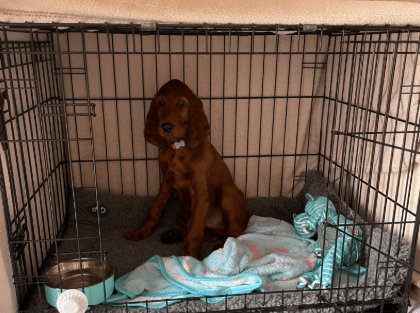
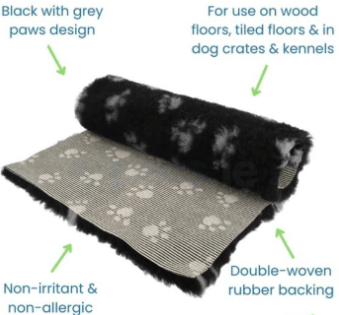
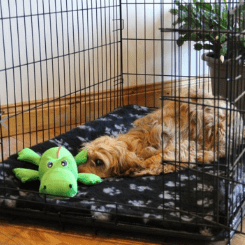
When setting up your puppy’s crate, aim to create a space that feels safe, secure, and comfortable. The crate should not be too large, as a smaller, cosy area helps puppies settle more easily. If the crate is too big, your puppy may use one end to toilet and then move away to sleep at the other end. Include soft bedding, ensure good airflow, and provide access to water if your puppy will be in the crate for longer periods. A well-set-up crate can become a calm and relaxing space for your puppy to rest.
Video 4: Making your garden secure
Making your garden puppy-proof is an important step in keeping your puppy safe while they explore. Check that all fencing is secure with no gaps or weak points where your puppy could escape, and remove any hazardous items such as toxic plants, sharp objects, or small items they could chew or swallow. It can also help to limit access to certain areas at first, allowing your puppy to explore gradually in a safe, controlled way. Creating a secure environment gives your puppy the freedom to explore while keeping them safe and preventing unwanted behaviours.
Video 5: Travel in the car
When transporting your puppy, safety and comfort should always come first. Using a crate is a great option, as it helps keep your puppy secure and prevents them from moving around the vehicle. The crate should be well-ventilated, appropriately sized, and positioned safely in the car so it cannot slide or tip during travel. Adding familiar bedding can help your puppy feel more relaxed, especially on longer journeys. Keeping travel calm and secure helps your puppy feel safe and supports positive associations with being in the car.
